


Running a business involves more than knowing how much money came in and went out. You also need to understand what those numbers mean and how they can inform your next decisions.
That’s where financial planning and analysis (FP&A) comes in.
FP&A uses historical financial information, current results, budgets, forecasts, and reasonable assumptions to help business owners understand performance and plan for the future.
Large companies may have dedicated FP&A teams, but small businesses can apply the same principles on a much simpler scale.
Affiliate Disclosure: This article contains affiliate links. If you join Wealthy Affiliate through one of my links, I may earn a commission at no additional cost to you. I recommend only products and services I have personally used or genuinely believe will add value for my readers. All opinions expressed in this review are my own.
What Is Financial Planning and Analysis?
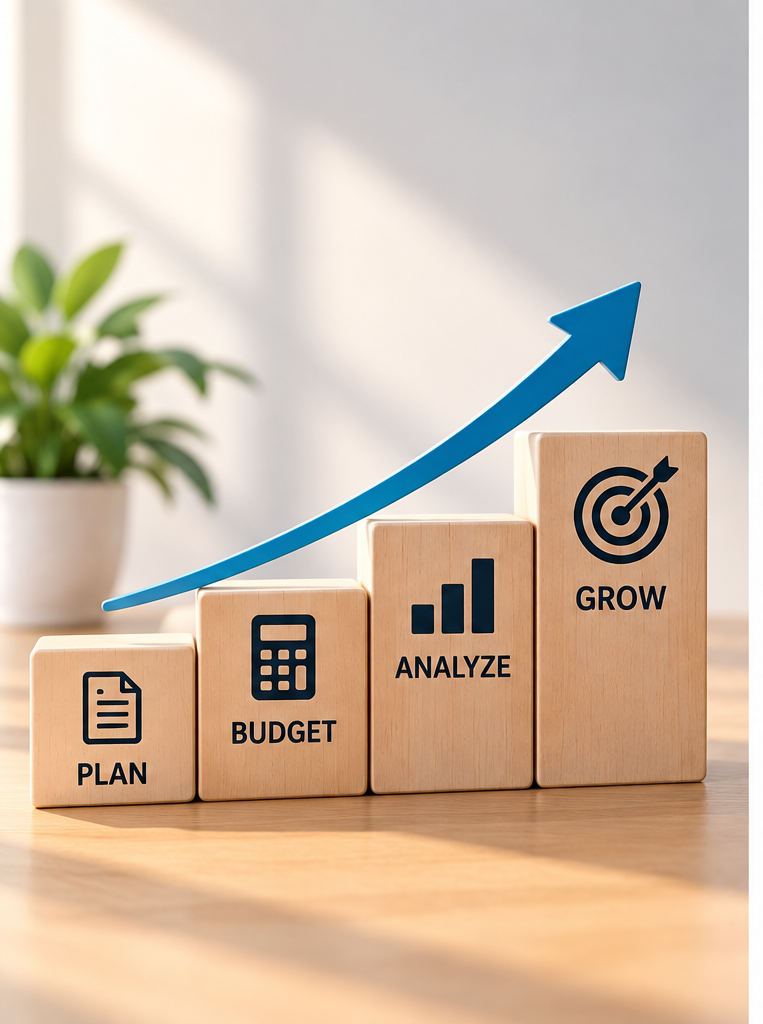
Financial planning and analysis generally includes four areas:
- Budgeting: Planning how to use financial resources.
- Forecasting: Estimating future revenue, expenses, and cash flow.
- Analysis: Comparing actual results with expectations.
- Decision support: Using financial information to evaluate choices involving pricing, hiring, inventory, spending, and growth.
FP&A doesn’t predict the future or guarantee better financial results. It helps owners understand possibilities, identify potential problems, and make decisions using better information.
Good Financial Planning Starts With Good Bookkeeping
Before building forecasts, ensure the underlying financial records are reasonably accurate and up to date.
Missing transactions, incorrect categories, unreconciled accounts, and mixed personal and business spending can distort financial reports.
Think of it this way:
Bookkeeping records what happened.
Financial analysis helps explain what happened.
Financial planning considers what could happen next.
Reliable bookkeeping provides the foundation for useful financial analysis.
1. Understand Your Current Financial Position
Start by reviewing where your business stands today.
Depending on your business, consider:
- Revenue
- Cost of goods sold
- Gross profit
- Operating expenses
- Accounts receivable
- Accounts payable
- Cash
- Inventory
- Loans and other liabilities
- Payroll costs
Don’t rely solely on your bank balance.
A healthy cash balance doesn’t necessarily mean the business is highly profitable. Some of that cash may already be needed for payroll, vendor bills, debt payments, taxes, or other obligations.
Likewise, a profitable company can experience cash-flow pressure when customers pay slowly or cash is tied up in inventory.
2. Build a Realistic Budget
For established businesses, historical financial results provide a useful starting point.
When estimating revenue, consider:
- Previous sales
- Seasonality
- Current trends
- Pricing changes
- Customer demand
- Capacity
- Expected new or lost customers
Avoid automatically assuming revenue will grow by an arbitrary percentage.
Then estimate expenses such as payroll, rent, insurance, utilities, advertising, inventory, software, professional services, supplies, and repairs.
Where practical, distinguish between relatively fixed expenses and costs that vary with sales.
This helps you understand how profitability changes when revenue changes.
3. Treat Owner Compensation Carefully
Payments to business owners shouldn’t automatically be categorized as regular operating expenses.
Accounting and tax treatment depend on the business structure and how the owner is compensated.
For example, a sole proprietor’s personal withdrawals are generally treated differently from employee wages. Corporations have different requirements, and shareholder-employees may be subject to compensation rules.
Keeping business and personal transactions separate also makes bookkeeping and financial analysis cleaner.
When you’re uncertain about the appropriate treatment, consult a qualified accounting or tax professional.
Turn Your Books Into Better Business Information
Budgets and forecasts are only as useful as the numbers behind them.
IntegriBooks helps small businesses maintain organized, current financial records so owners have clearer information for budgeting, reviewing performance, and planning ahead.
Talk with IntegriBooks about building a stronger bookkeeping foundation for your business.
4. Create a Cash-Flow Forecast
Profit and cash flow aren’t the same thing.
A business can report a profit while experiencing a cash shortage because customers haven’t paid yet, inventory consumed cash, or major obligations are approaching.
A cash-flow forecast estimates when money is expected to enter and leave the business.
Expected inflows may include:
- Cash and card sales
- Customer collections
- Subscription payments
- Other operating receipts
Expected outflows may include:
- Payroll
- Inventory
- Rent
- Utilities
- Vendor payments
- Loan payments
- Equipment
- Taxes
- Other operating costs
A forecast won’t perfectly predict the future. Its value is in identifying potential cash shortages or surpluses early enough to evaluate your options.
5. Compare Budget With Actual Results
Don’t create a budget and forget about it.
Compare your expectations with actual results.
Suppose monthly revenue exceeded your budget by $5,000, but expenses exceeded the budget by $10,000.
Looking only at revenue would give you an incomplete picture.
Ask why the difference occurred.
Were materials more expensive? Did payroll increase? Was there an unexpected repair? Did advertising costs rise?
This type of variance analysis can help owners understand what’s driving performance and determine whether action is needed.
6. Track the KPIs That Matter
Small businesses don’t need dozens of key performance indicators.
Choose metrics that answer meaningful questions about your business.
Examples may include:
- Revenue growth
- Gross margin
- Operating margin
- Accounts receivable
- Average transaction value
- Inventory turnover
- Labor cost as a percentage of revenue
- Recurring revenue
- Customer retention
The right metrics depend on the business.
A retailer, restaurant, consultant, and subscription company shouldn’t necessarily track the same KPIs.
7. Use Scenario Planning
Instead of pretending you know exactly what will happen, build a few scenarios.
Base case: What happens if the business performs roughly as expected?
Downside case: What happens if sales decline, expenses increase, or customers pay more slowly?
Upside case: What happens if demand exceeds expectations?
Scenario planning can expose vulnerabilities.
For example, could the business continue meeting payroll if revenue dropped by 10%? Could it finance enough inventory if demand suddenly increased?
The purpose isn’t to predict which scenario will happen. It’s to understand your options.
8. Plan Cash Reserves Around Your Business
There’s no universal cash-reserve amount that’s right for every company.
Consider:
- Monthly fixed expenses
- Revenue stability
- Payroll
- Inventory
- Debt
- Seasonality
- Customer concentration
- Access to financing
- Upcoming investments
- Tax obligations
A low-overhead consultant may have very different needs from a retailer carrying substantial inventory.
Instead of following an arbitrary dollar amount, determine what risks your reserve is intended to cover.
9. Keep Tax Planning Separate
Financial planning and tax planning overlap, but they aren’t interchangeable.
Your actual tax obligations can depend on business structure, taxable income, deductions, credits, payroll, withholding, and other factors.
Similarly, entering an expense in bookkeeping software doesn’t automatically make it tax-deductible.
For federal income-tax purposes, business expenses generally must meet applicable requirements, including the ordinary-and-necessary standard. Personal expenses generally aren’t deductible as business expenses.
Maintain appropriate supporting records and consult a qualified tax professional for questions specific to your circumstances.
10. Review and Update Your Forecast
A forecast shouldn’t sit untouched for an entire year.
Customers change. Prices increase. Employees are hired. Suppliers adjust terms. Equipment breaks. Marketing campaigns perform differently than expected.
Update your assumptions when circumstances materially change.
Some businesses benefit from monthly forecasting, while others may find quarterly reviews sufficient. Rapidly growing or financially volatile businesses may need more frequent attention.
A Simple Monthly FP&A Routine
You don’t need a complicated corporate process.
Each month:
- Update the bookkeeping.
- Reconcile bank and credit-card accounts.
- Review the income statement and balance sheet.
- Check receivables and upcoming bills.
- Compare budget with actual results.
- Update the cash-flow forecast.
- Review important KPIs.
- Identify decisions or problems requiring attention.
The goal isn’t to produce more reports.
It’s to turn reliable financial information into useful decisions.

Common FP&A Mistakes to Avoid
Forecasting revenue without expenses: Higher sales can require more labor, inventory, marketing, or fulfillment.
Treating forecasts as promises: Forecasts are estimates based on assumptions.
Relying only on the bank balance: Your bank account doesn’t show the complete financial position of the business.
Ignoring receivables: A sale doesn’t provide immediate cash when the customer hasn’t paid.
Mixing personal and business spending: This can complicate bookkeeping, analysis, and tax preparation.
Using inaccurate books: Sophisticated forecasts can’t compensate for unreliable underlying financial records.
Better Financial Decisions Start With Better Information
Financial planning and analysis doesn’t require a large finance department.
For a small business, FP&A can mean understanding past performance, evaluating current results, estimating what may happen next, and adjusting when reality differs from the plan.
It can help you ask better questions:
Can we afford another employee?
What happens if sales decline?
Why did our expenses increase?
Can we purchase additional inventory without creating cash-flow pressure?
Are customers paying quickly enough?
FP&A can’t eliminate uncertainty or guarantee growth.
It provides a more structured way to understand that uncertainty and make informed business decisions.
Build Your Financial Plans on Better Books
Budgets, forecasts, and financial analysis become more useful when organized financial records support them.
IntegriBooks helps small businesses keep their bookkeeping current, organized, and ready to support better financial conversations and decisions.
Connect with IntegriBooks to build a clearer financial foundation for your business.
Disclaimer: This article is for general educational purposes and does not constitute individualized accounting, tax, investment, legal, or financial advice. Financial projections are estimates, and actual results may differ. Tax and accounting treatment depends on each business’s circumstances. Consult appropriately qualified professionals regarding your specific situation.