
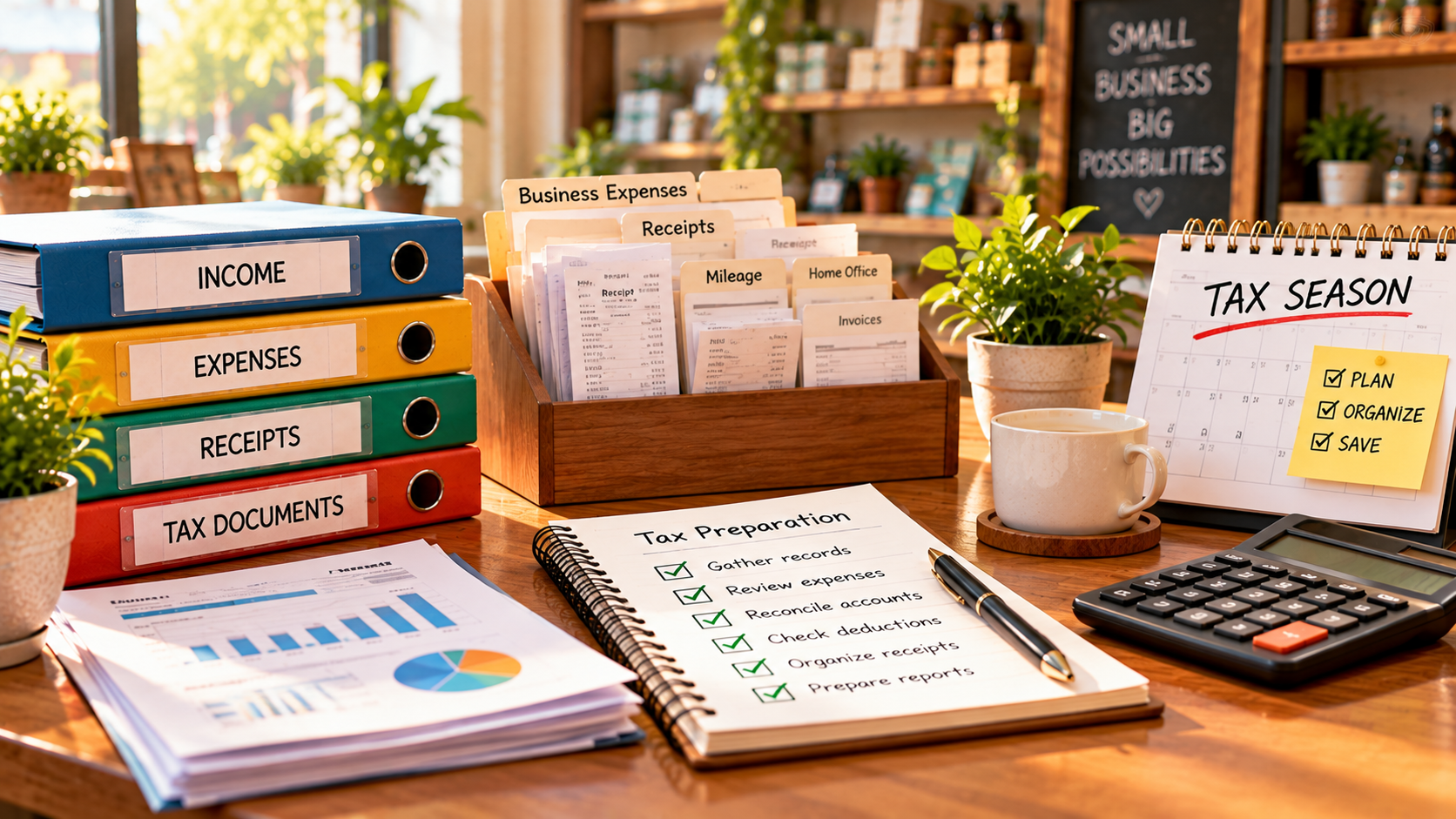
Tax season can be stressful for small business owners. Between finding receipts, reviewing expenses, and ensuring you report your income correctly, it’s easy to wonder whether you’ve missed something important.
That’s where good bookkeeping makes a difference.
Accurate financial records can help you identify eligible tax deductions, avoid reporting mistakes, and reduce the time spent preparing your return. They also give you a clearer picture of how your business is performing throughout the year.
But here’s an important distinction: bookkeeping doesn’t create tax deductions or guarantee a smaller tax bill. It helps you claim the deductions you’re legally entitled to while keeping your records organized and ready to support them.
Affiliate Disclosure: This article contains affiliate links. If you join Wealthy Affiliate through one of my links, I may earn a commission at no additional cost to you. I recommend only products and services I have personally used or genuinely believe will add value for my readers. All opinions expressed in this review are my own.
Here’s how it works.
1. Good Bookkeeping Helps You Find Deductible Expenses
One of the biggest ways bookkeeping can help at tax time is by making business expenses easier to identify.
Imagine running a small online store. Throughout the year, you pay for packaging materials, advertising, software subscriptions, shipping, and other operating costs.
If you don’t record those transactions consistently, you might overlook legitimate expenses.
Under general federal tax rules, business expenses must be ordinary and necessary to qualify for a deduction. That means they’re common and accepted in your business and help or support its operations.
Examples of potentially deductible expenses include:
- Business-related software and subscriptions
- Advertising and marketing costs
- Office supplies
- Eligible business insurance
- Professional services
- Qualifying business travel and vehicle expenses
Not every purchase is immediately deductible. Equipment, inventory, startup costs, and expenses with personal-use components may require special treatment.
How Bookkeeping Helps Reduce Small Business Taxes
Consider a business with $80,000 in revenue and $30,000 in properly recorded deductible expenses.
Its profit before other adjustments would be $50,000.
If another $2,000 in legitimate deductible expenses was initially overlooked, correctly recording those expenses could reduce that profit to $48,000.
That doesn’t mean the business saves $2,000 in taxes. The actual tax effect depends on its tax treatment and circumstances.
The lesson is simple: accurate bookkeeping helps you avoid missing eligible expenses.
2. It Helps Separate Business and Personal Spending
Mixing personal and business transactions is a common bookkeeping problem.
You may occasionally pay a business bill with a personal credit card or buy personal items with your business debit card.
Without proper records, it becomes harder to determine which expenses belong to the business.
This can lead to missed deductions, incorrect claims, and unnecessary work during tax preparation.
What to do: Use dedicated business accounts where practical. Record owner contributions, draws, and reimbursements correctly, and keep supporting documents for business purchases.
A separate bank account helps with organization, but it doesn’t automatically make an expense tax-deductible.
3. It Makes Business Expense Tracking Easier

If you’re wondering how to track business expenses for tax deductions, start with a process you can maintain throughout the year.
Record each transaction with enough information to explain what happened.
Useful details include the transaction date, amount, vendor, business purpose, expense category, and supporting documentation.
Digital receipts and invoices can make this easier, especially when you store them alongside the corresponding bookkeeping entries.
Review expenses regularly rather than waiting until December.
Remember that a bank or credit card statement alone may not always establish the business purpose of a purchase.
4. It Helps You Avoid Common Tax Reporting Errors
Bookkeeping mistakes can affect more than your expense totals.
For example, incorrectly recording loan proceeds as sales can overstate revenue. Recording a customer payment twice can create the same problem.
Similarly, treating loan principal payments as ordinary expenses can understate profit.
Accurate bookkeeping helps distinguish among revenue, expenses, assets, liabilities, and owner transactions.
What to do: Reconcile bank and credit card accounts monthly. Review unusual entries and investigate differences before making adjustments.
If an error affects a previously filed tax return, consult a qualified tax professional before changing prior-year records.
5. It Helps You Evaluate the Home Office Deduction
Working from home doesn’t automatically qualify you for a home office deduction.
For qualifying self-employed taxpayers, the space generally must be used regularly and exclusively for business and meet an additional qualifying-use test.
One common way to qualify is to use your home office as your principal place of business.
For example, a self-employed contractor who works at customer locations may still qualify if the home office is used regularly and exclusively for substantial administrative or management activities and there’s no other fixed location where those activities are substantially performed.
Other qualifying uses include regularly meeting customers or clients at home in the normal course of business, or regularly and exclusively using a separate, unattached structure for business.
Limited exceptions to exclusive use apply to certain qualifying inventory or product-sample storage and daycare operations.
If eligible, you may be able to use the simplified method or actual-expense method, subject to applicable limitations.
Good records help document business use, workspace measurements, and eligible expenses.
6. It Makes Tax Preparation More Efficient
Reconstructing an entire year’s finances shortly before a deadline can be exhausting.
You might spend hours searching for invoices, checking bank statements, and figuring out whether you already recorded expenses.
Consistent bookkeeping makes that process easier.
Your tax preparer can work from organized financial statements and supporting documents instead of rebuilding missing information.
This may reduce avoidable cleanup work, although professional fees and preparation time vary.
Want cleaner records and fewer surprises when tax season arrives? Explore how IntegriBooks can help keep your small-business bookkeeping organized and tax-ready.
7. Your Business Structure Changes What You Need to Track
Your business structure affects how you report income, expenses, and taxes.
| Sole proprietor | Business income and expenses generally flow into Schedule C |
| Single-member LLC | Usually treated as a disregarded entity for federal income tax unless another classification is elected. |
| Multi-member LLC | Generally taxed as a partnership unless a different classification is elected. |
| S corporation | Requires careful tracking of payroll, shareholder compensation, and distributions |
| C corporation | Files its own federal corporate income tax return and tracks corporate transactions separately |
An LLC is a legal business structure, not a single federal tax classification.
The right bookkeeping process should reflect both your legal structure and federal tax treatment.
8. Your Bookkeeping Tool Matters—But Your Habits Matter More
How are you currently tracking income and expenses?
You may be using QuickBooks, Excel, another accounting platform, or a mix of spreadsheets and bank statements.
Each approach can work in the right circumstances.
Accounting software may help automate transaction imports, reconciliation, invoicing, and reporting.
Spreadsheets can work for simpler operations, but they require strong controls to prevent missing entries and formula errors.
Regardless of the tool, regular reviews are essential.
Software doesn’t automatically know whether every expense is deductible or categorized correctly.
How to Prepare Bookkeeping Records for Tax Season
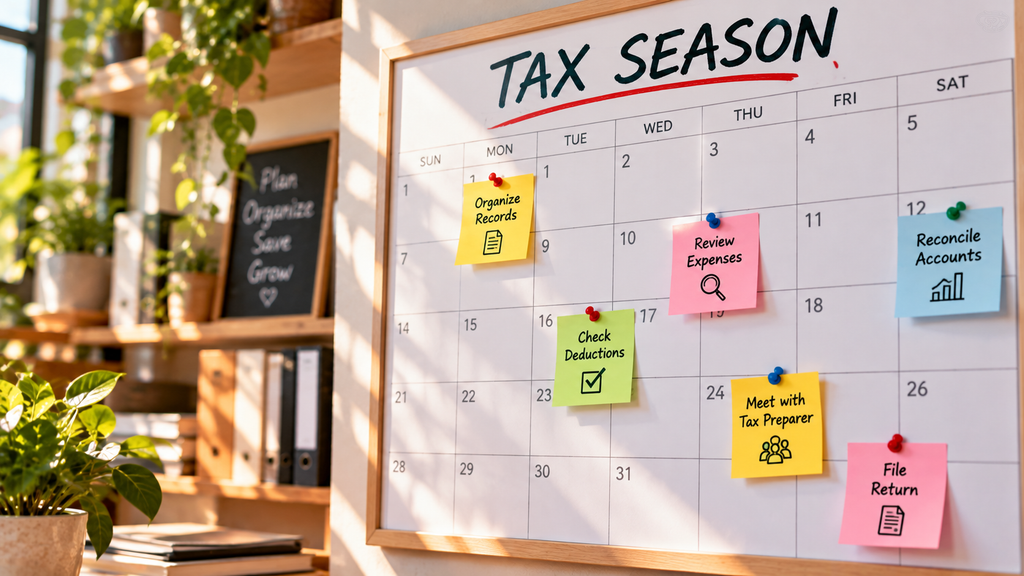
You don’t need to wait until your tax appointment to start preparing.
Use this checklist:
- Reconcile accounts. Match bank and credit card records with your bookkeeping.
- Review income. Check sales, customer payments, refunds, and applicable information returns.
- Check expenses. Verify categories, business purposes, and supporting documents.
- Review outstanding balances. Investigate unpaid invoices, bills, loans, and other liabilities.
- Organize additional records. Include inventory, payroll, assets, mileage, and home office documentation where applicable.
- Prepare financial reports. Review your profit and loss statement and balance sheet for unusual amounts.
- Ask questions early. Have a qualified professional review uncertain transactions or tax treatments.
Keep records for the periods required by applicable law. Some records, particularly those involving assets or employment taxes, may need longer retention.
FAQs About Bookkeeping and Small Business Taxes
Can bookkeeping actually lower my taxes?
It can help you identify eligible deductions and avoid overstating taxable income. However, it doesn’t guarantee savings, and deductions must meet applicable tax requirements.
Should I do my own bookkeeping or hire a professional?
That depends on your time, transaction volume, business complexity, and confidence with financial records. A simple business may manage its own books, while a growing business may benefit from professional support.
Is bookkeeping the same as tax preparation?
No. Bookkeeping involves recording and organizing financial transactions. Tax preparation uses those records, along with applicable tax rules, to prepare returns.
How often should I update my books?
Monthly reviews and reconciliation are a useful baseline. Businesses with high transaction volumes, payroll, or inventory may need to review them more often.
Final Thoughts: Better Books Make Tax Season Easier
The biggest benefit of bookkeeping isn’t finding a shortcut to a smaller tax bill.
It’s knowing that your income, expenses, and financial records are accurate enough to support your tax reporting.
When you keep your books updated throughout the year, you’re better positioned to identify legitimate deductions, catch mistakes early, and approach tax season with fewer surprises.
Good bookkeeping is useful long before taxes are due. Visit IntegriBooks to learn how professional bookkeeping support can help you maintain reliable financial records year-round.